Home / Ingredients / Berberine
OPTISOLV® ingredient for metabolic health
OPTISOLV® Berberine: high-absorption berberine for metabolic formulations
Berberine is a key metabolic health ingredient, yet native berberine is poorly absorbed. OPTISOLV® Berberine changes that: 13.4× higher absorption in a human intestinal cell model, compared to native berberine HCl.
13.4×
Higher absorption vs. berberine HCl
Human intestinal cell model (Caco-2)
10×
Higher solubility in intestinal media
Simulated intestinal fluid
250-500 mg
Recommended dose, vs. 1,000-1,500 mg native
Specification
Recognition
Most Innovative Nutraceutical Ingredient 2026
At the Vitafoods Europe Startup Challenge 2026, the jury named OPTISOLV® Berberine the most innovative nutraceutical ingredient of the year.
The challenge
A metabolic heavyweight that barely gets through
Consumers turn to berberine to take control of blood sugar, weight and overall vitality. According to the Mintel Global New Products Database, berberine supplement launches grew by 58 % a year between 2021 and 2025.
But native berberine dissolves poorly and is taken up slowly in the gut. Brands compensate with high doses of 1,000-1,500 mg, split over the day. That means large capsules, frequent intake and gastrointestinal discomfort, which reduces consumer compliance.
Native berberine vs. OPTISOLV® Berberine
Native berberine
OPTISOLV® Berberine
Daily dose
1,000-1,500 mg per day
250-500 mg per day
Release
Multiple doses a day due to unfavourable release
Best-in-class dissolution profile with steady release over time
Tolerability
Gastrointestinal discomfort common at high doses
Lower dose, better tolerability
OPTISOLV® dual-coating enables the next generation of metabolic health products. How OPTISOLV® works
Visual comparison
See the difference
Native berberine HCl (left) and OPTISOLV® Berberine (right) side by side during dissolution testing.
Native berberine HCl vs. OPTISOLV® Berberine
Side by side in a dissolution test: native berberine HCl settles as a visible sediment at the bottom of the vessel, while OPTISOLV® Berberine disperses evenly throughout the medium.
EVANIUM lab, Regensburg. Measured results in Our data below.
Our data
Measured in our lab in Regensburg
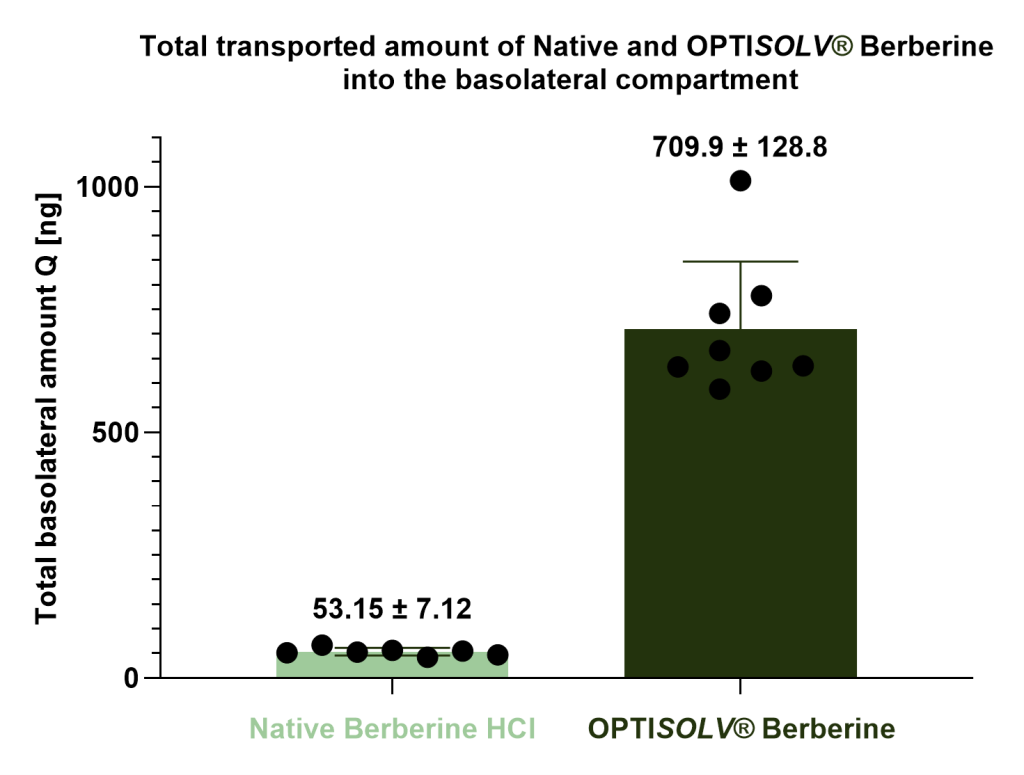
Absorption in a human intestinal cell model
The OPTISOLV® Technology increases absorption 13.4× compared with native berberine HCl.
Method: Caco-2 cell model after digestion in FaSSIF V2 (37 °C, 2 h), dose equivalent to a 500 mg capsule; comparator berberine HCl.
10×
Higher solubility in intestinal media
3
Commercial formulations compared: phospholipid complex, microencapsulated berberine, berberine HCl 97 %
Dissolution during simulated digestion
OPTISOLV® Berberine shows a best-in-class dissolution profile compared with commercial formulations.
Method: FaSSGF 1 h and FaSSIF V2 4 h, 37 °C, USP Apparatus II, HPLC; comparators phospholipid complex, microencapsulated berberine, berberine HCl 97 %.
Full data package available for formulation partners on request.
Mechanism of action
How berberine acts on metabolism, fat cells and the gut
Scientific literature describes four main pathways through which berberine supports glucose and fat metabolism. They explain why getting more berberine to the intestinal wall matters.
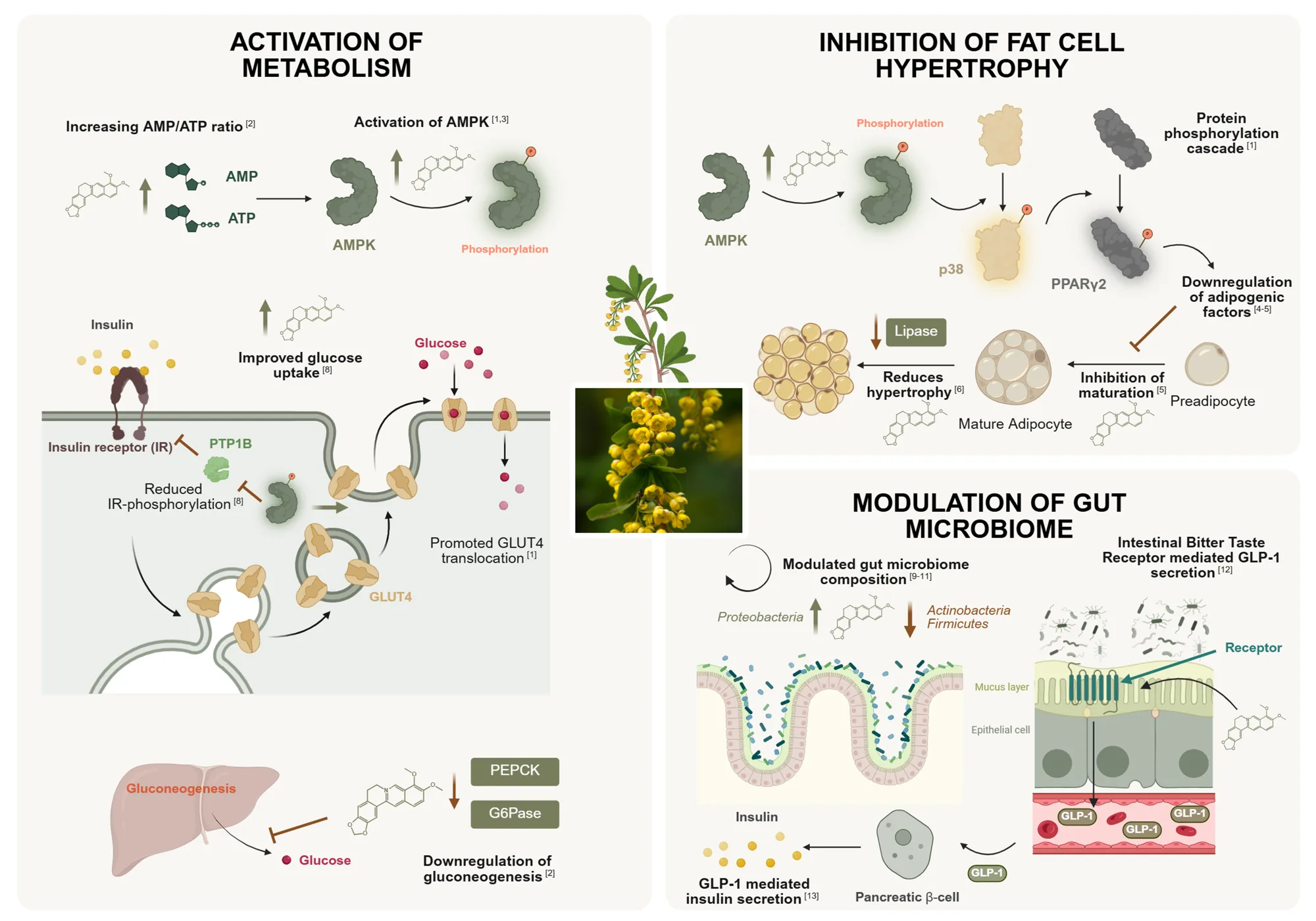
Click to enlarge. Mechanism of action of berberine, based on published literature. Illustration: EVANIUM.
Scientific references
- Lee, Y S et al., Diabetes, 2006.
- Zieniuk, B and Pawełkowicz, M, Metabolites, 2025.
- Ren, G et al., Frontiers in Pharmacology, 2020.
- Yang, Y et al., Molecular Medicine Reports, 2020.
- Yang, Y et al., Lipids, 2019.
- Ağaçdiken, A A and Göktaş, Z, PeerJ, 2025.
- Wu, L et al., Cell Death & Disease, 2019.
- Chen, C et al., Biochemical and Biophysical Research Communications, 2010.
- Zhang, L et al., Frontiers in Cellular and Infection Microbiology, 2021.
- Wang, Y et al., Metabolism, 2017.
- Cui, H-X et al., Oxidative Medicine and Cellular Longevity, 2018.
- Yu, Y et al., Biochemical Pharmacology, 2015.
- Lee, Y-S and Jun, H-S, Metabolism, 2014.
Activates AMPK
Berberine raises the cellular AMP/ATP ratio and activates AMPK, the cell’s energy sensor. Cells then burn sugar and fat instead of storing them, and glucose production in the liver is downregulated.1-5
Improves insulin sensitivity
Via AMPK signalling and insulin receptor phosphorylation, berberine promotes GLUT4 translocation to the cell membrane and increases glucose uptake into cells.8
Limits fat cell growth
Berberine downregulates adipogenic factors such as PPARγ2, inhibits the maturation of pre-adipocytes and promotes brown fat tissue, which supports weight control.4-7
Modulates the gut microbiome
Berberine shifts gut microbiome composition and activates intestinal bitter taste receptors. This triggers GLP-1 release, which stimulates insulin secretion by pancreatic β-cells.9-13
Specification
Ready for your formulation
Source
Berberis aristata roots
Active content
N.L.T. 30 % berberine
Other ingredients
Gamma-cyclodextrin, Camellia sinensis extract, lecithin (sunflower)
Appearance
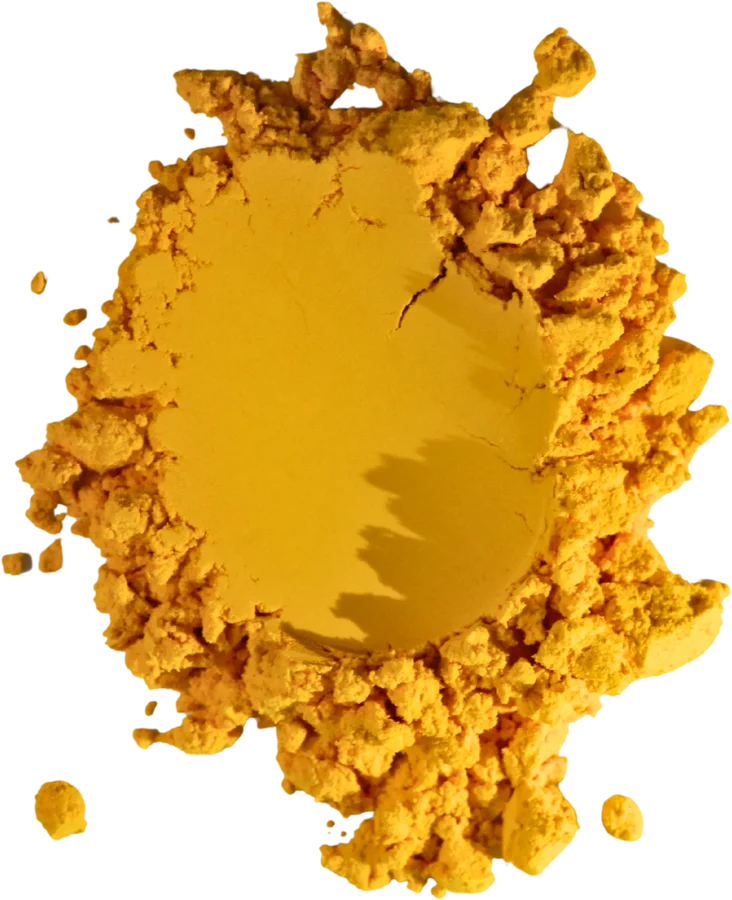
Yellow free-flowing powder
Recommended dose
250-500 mg
Dosage forms
Powders, capsules, tablets
Shelf life
24 months, stored cool and dry, protected from sunlight
Pack size
10 kg PE in an aluminium bag
Origin
Developed in Germany, produced in France
Quality & regulatory
Documented for every batch.
Production in an FDA-registered facility, FSSC/ISO 22000, HACCP and cGMP compliant. Every batch is tested for heavy metals, contaminants, content, identity and microbiology, with full traceability.
Detailed statements (allergens, BSE/TSE, contaminants, Novel Food, origin, flow chart) on request.
FAQ
Questions from formulators
What is OPTISOLV® Berberine?
OPTISOLV® Berberine is a free-flowing berberine ingredient for nutraceuticals, standardised to at least 30 % berberine from Berberis aristata roots. The berberine is encapsulated with EVANIUM’s OPTISOLV® dual-coating technology: a gamma-cyclodextrin inner layer and a sunflower lecithin outer layer.
How much better is OPTISOLV® Berberine absorbed than native berberine?
In a human intestinal cell model (Caco-2), OPTISOLV® Berberine showed 13.4x higher absorption than berberine HCl after pre-digestion in intestinal fluid and 2 hours of incubation (709.9 ng vs. 53.15 ng transported berberine).
What is the recommended dose?
250-500 mg OPTISOLV® Berberine. Native berberine is typically dosed at 1,000-1,500 mg per day, often split into several doses.
Does it contain synthetic emulsifiers or allergens?
No. The other ingredients are gamma-cyclodextrin, Camellia sinensis extract and sunflower lecithin. The ingredient is vegan, non-GMO, free from EU-listed allergens and not irradiated or treated with ethylene oxide.
Formulate with OPTISOLV® Berberine
Samples, specification and the full data package for your product development, plus formulation support from our lab.
This page is intended for professionals in the food supplement, food and pharmaceutical industry. The ingredient is not intended to diagnose, treat, cure, or prevent any disease. Descriptions of the mechanism of action summarise published scientific literature on berberine and are not health claims under Regulation (EC) No 1924/2006 or U.S. FDA regulations. The regulatory status, labelling and suitability for use in finished products are the responsibility of the manufacturer or distributor of the final product.